|
Getting your Trinity Audio player ready...
|
How to Write a Bestseller: Step-by-Step Tips for Authors
Every bestselling book started as a blank page. Just like the one staring at you right now.
You have stories in your head. Ideas that keep you up at night. Messages you want to share with the world. But how do you turn those thoughts into an actual book people buy and love?
Learning to write a bestseller isn’t about magic or luck. It’s about following simple steps that work. This book writing guide shows you exactly what to do, when to do it, and how to avoid mistakes that stop most writers.
These author writing tips come from real writers who succeeded. Ready to join them? Let’s start.
The Truth About Bestselling Books
Bestsellers aren’t written by superhumans with special powers. They’re written by regular people who refused to quit. People just like you.
Most bestselling authors failed many times before succeeding. They wrote bad first drafts. They got rejected. They doubted themselves. But they kept going.
The difference between published authors and dreamers? Published authors finished their books. That’s it. Finishing is the real secret to success.
What Bestsellers Have in Common
Every successful book solves a problem or tells a gripping story. Readers buy books that give them something valuable. Entertainment, knowledge, escape, answers.
Bestsellers connect emotionally with readers. They make people feel understood. They spark hope or excitement. They touch hearts, not just minds.
Great books also deliver on their promise. The cover and title promise something. The book delivers that thing. No bait and switch. Just honest value from beginning to end.
Before You Write a Single Word

Stop and think first. What’s your book really about? Can you explain it in one simple sentence? If not, keep thinking until you can.
That one sentence becomes your north star. When you get lost in writing (and you will), it guides you back. When ideas scatter everywhere, it focuses you.
Also decide who needs your book. Not “everyone who reads.” Be specific. Who struggles with what problem? Who dreams of what outcome? Write for real people with real needs.
Picking Your Topic Wisely
Choose topics you actually care about. Passion shows in writing. Readers feel when you truly care versus when you’re faking it for money.
Research what’s already selling in your category. Check Amazon bestseller lists. What topics are hot? What angles haven’t been covered yet? Find your unique spin.
Make sure enough people want your topic. Writing a book nobody wants wastes your time. Look for topics with proven demand plus room for your fresh perspective.
Creating Your Book Blueprint
Think of your book like building a house. You need a plan before construction starts. Your outline is that plan.
Don’t panic outlines can be super simple. List your main points or story beats. Put them in order that makes sense. That’s enough to start.
This blueprint saves you from writing yourself into corners. You know where you’re going. You won’t waste weeks writing chapters that don’t fit or matter.
Building a Strong Structure
Fiction needs beginning, middle, and end. Setup, conflict, resolution. Every scene moves the story forward. Cut anything that doesn’t.
Nonfiction needs logical flow. Each chapter builds on previous ones. Readers follow your path from problem to solution. No random jumps that confuse people.
Both need hooks that keep readers turning pages. End chapters with questions or cliffhangers. Make people need to know what happens next.
Writing Your First Draft Fast
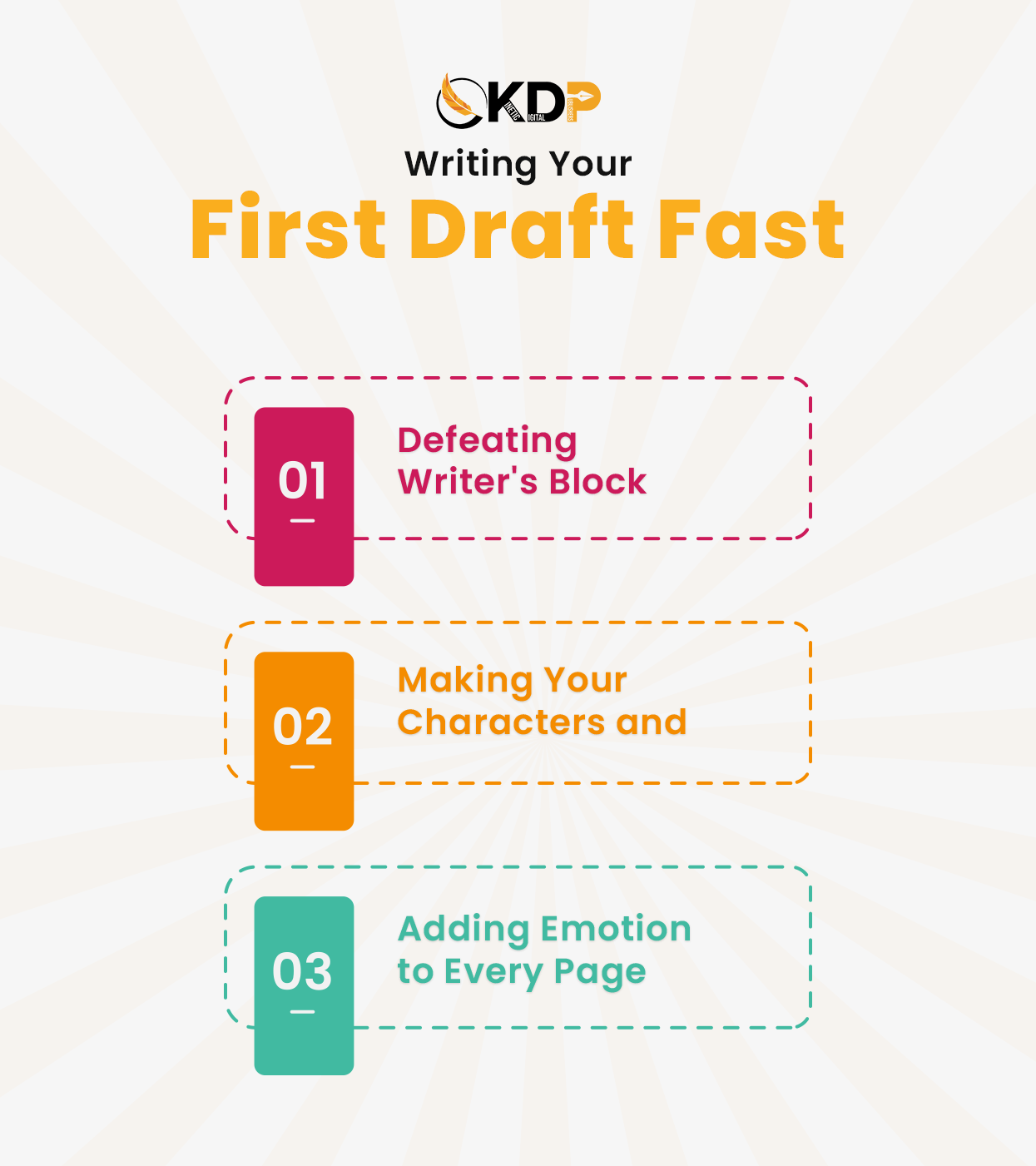
Speed is your friend on first drafts. Race through it. Don’t stop to fix things. Don’t judge yourself. Just write.
Set a deadline. Maybe 30 days. Maybe 90 days. Pick a realistic timeframe and commit. Deadlines force you to keep moving instead of overthinking.
Write in chunks. One hour a day beats random whenever-I-feel-like-it writing. Consistency builds momentum. Momentum carries you to the finish line.
Defeating Writer’s Block
Stuck? Write badly on purpose. Give yourself permission to write total garbage. This trick defeats perfectionism that freezes most writers.
Change your location. New coffee shop, library, park bench. Sometimes a fresh environment unsticks your brain and words flow again.
Skip the hard part. Can’t write chapter five? Jump to chapter six. Come back later. Forward progress matters more than perfect order.
Making Your Characters and Ideas Live
Whether fiction or nonfiction, your book needs life. Flat writing bores readers. Vibrant writing grabs them and won’t let go.
Use specific details instead of vague descriptions. Don’t say “a dog.” Say “a muddy golden retriever.” Specific = memorable. Vague = forgotten instantly.
Show feelings through actions, not just telling. Instead of “Sarah was angry,” write “Sarah slammed the door so hard the windows rattled.” Readers experience it.
Adding Emotion to Every Page
Emotion makes readers care. They remember how your book made them feel long after forgetting exact words or facts.
Put yourself in the scene. What would you see, hear, smell, taste, touch? Sensory details transport readers into your world. They’re not reading they’re experiencing.
Vary your sentence length. Short sentences create urgency. Longer, flowing sentences slow things down and let readers breathe. Mix both for rhythm that feels natural.
Finishing Strong When You Want to Quit
The middle is where most writers quit. The excitement faded. The work feels endless. Doubt creeps in louder than ever.
Push through anyway. Remind yourself why you started. Think about readers who need your message. Picture holding your finished book. That feeling is worth fighting for.
Break the remaining work into tiny pieces. Don’t think “I have 40,000 words left.” Think “I’ll write 500 words today.” Small goals feel achievable.
Crossing the Finish Line
The ending matters most. Readers remember how books made them feel at the end. Stick your landing. Deliver what you promised at the beginning.
Tie up loose ends. Answer questions you raised. Give readers closure or transformation. Leave them satisfied, even if it’s a sad ending.
Type “THE END” with pride. You did what most people only talk about. You finished a book. That alone makes you a winner.
Turning Rough Drafts Into Gold
First drafts are supposed to stink. That’s normal. The magic happens in rewriting. This is where good books become great.
Read your entire manuscript once without changing anything. Just absorb it. Notice what works and what doesn’t. Big picture first, details later.
Then attack problem areas. Boring parts get cut or rewritten. Confusing sections get clarified. Weak beginnings get strengthened. Be ruthless in service of making your book better.
The Power of Professional Eyes
You can’t see your own blind spots. Your brain fills in gaps and misses mistakes. Professional editors catch everything you miss.
Developmental editors fix big structure problems. Copy editors polish your sentences. Proofreaders catch final typos. Each type serves different purposes.
Investing in editing isn’t optional for serious authors. Readers expect quality. One typo-filled book destroys your reputation. Professional editing protects you.
Designing a Cover That Grabs Attention
Your cover competes with thousands of others. It has one second to stop a scroller. One second to make someone curious enough to click.
Study bestseller covers in your genre. Notice colors, fonts, imagery. Successful covers share patterns. Learn these patterns then put your unique spin on them.
Never design your own cover unless you’re a pro designer. DIY covers scream amateur. Readers judge instantly. A cheap cover says your book is cheap too.
Crafting Descriptions That Sell
Your book description is your sales pitch. Browsers read it to decide whether to buy. Make every word count.
Open with a hook. One sentence that grabs attention instantly. Curiosity, emotion, stakes—whatever makes people need to know more.
Keep it tight. Three short paragraphs maximum. Each sentence moves them closer to clicking buy. Cut everything that doesn’t serve this purpose.
Words That Convert Browsers to Buyers
Use emotional language. Connect with feelings your readers have. Speak directly to their pain, dreams, or desires. Make them feel seen.
Create intrigue. Hint at transformations or twists without spoiling everything. Make readers curious enough to buy the book for answers.
End with a push. “Start your journey today” or “Discover the truth inside.” Clear action. Tell them what to do next.
Getting Your Book Into Readers’ Hands
You wrote an amazing book. Now you need readers to find it. Publishing and marketing work together to make this happen.
Professional self-publishing services handle technical publishing stuff. Formatting, ISBN, distribution, Amazon setup. You stay creative. They handle logistics.
Quality publishing makes your book look and perform like traditionally published books. Readers can’t tell the difference. That professional appearance builds trust instantly.
Choosing the Right Publishing Support
Look for publishers who let you keep your rights and royalties. You wrote it. You should own it forever. Fair payment for services, not lifetime cuts.
Complete services save you time. One team handling editing, design, formatting, and distribution is way easier than managing five different freelancers yourself.
Ask about their Amazon expertise. Most book sales happen there. Publishers who know Amazon’s tricks and algorithms give your book better chances.
Building Buzz Before Launch Day
Start marketing before your book publishes. Build anticipation. Get people excited and waiting. Launch momentum matters hugely for success.
Grow your email list. These subscribers become your first buyers and reviewers. Email gives you direct access to people who already care.
Tease content on social media. Share your writing journey. Show behind-the-scenes moments. Make followers feel part of your book’s creation. They’ll root for your success.
Creating a Successful Launch
Plan your launch like an event. Set a date. Build excitement leading up to it. Coordinate all your promotional activities around launch week.
Ask advance readers for reviews. Having 10-20 reviews on launch day signals quality to browsers. Reviews build trust. Trust converts to sales.
Professional book marketing services know launch strategies that work. They’ve done hundreds. Their experience helps your launch succeed.
Marketing That Keeps Your Book Selling
Launches create spikes. Marketing creates sustained sales. You want both. Quick wins plus long-term steady income from your book.
Amazon ads reach people searching for books like yours. Small budgets work fine. Test, learn, adjust. Scale what performs. Direct response marketing at its best.
Keep showing up on social media and email. Share valuable content related to your book’s topic. Stay top of mind. People buy when they’re ready, not when you need sales.
Measuring What Actually Works
Track your results. Sales numbers. Review counts. Email list growth. Website traffic. What you measure, you can improve.
Some marketing works. Some doesn’t. Data tells you which is which. Double down on winners. Drop losers. Let results guide your decisions.
Give strategies time though. Week one results don’t tell the whole story. Look at trends over months. Patience plus persistence wins.
Conclusion
Learning to write a bestseller takes work but you can absolutely do it. This book writing guide gave you the roadmap. These author writing tips come from real success.
Write daily. Finish your draft. Edit ruthlessly. Get professional help for cover and editing. Publish with quality. Market consistently. Then write your next book.
Bestselling authors aren’t special. They’re persistent. They finished when others quit. They improved when others stayed stuck. They took action when others just talked.
Ready to stop dreaming and start doing? Get expert help today and write a bestseller with Kinetic Digital Publishers. We guide you from first word to bestseller list. Your success story starts now.