|
Getting your Trinity Audio player ready...
|
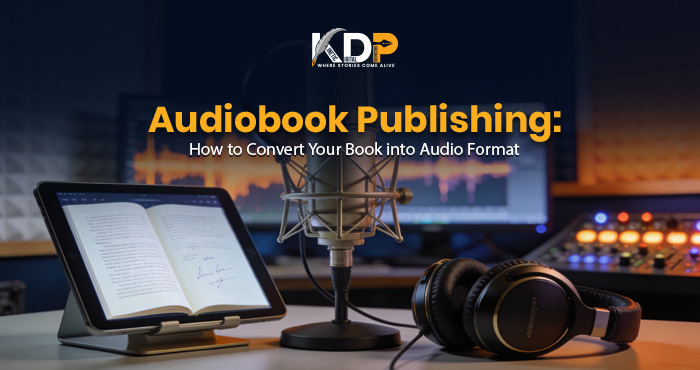
Audiobook Publishing: How to Convert Your Book into Audio Format
Your book is complete. Perhaps it has been published. You’re finding out more and more about the phenomenon of audiobooks and how it is expanding rapidly, how new readers discover authors whom they would never have discovered using paper and print, how one single audiobook can expose you to an entire new readership who hasn’t even opened a book for decades.
Audiobook publishing is no longer a niche format reserved for big traditional publishers. Across the United States, thousands of authors are turning their books into audiobooks every single day, exposing their work to an audience of readers who read with their ears while commuting, working out, doing housework, or the half hour right before bedtime, when looking at the phone screen is the absolute last thing you want.
We will take you step by step on the journey of making it happen, and all the way to publishing.
Why Audiobook Publishing Is Worth Taking Seriously Right Now
Audiobook consumption in America has been increasing steadily over the last ten years, and it doesn’t seem to be stopping anytime soon. Audiobook listeners usually read more books than traditional print readers; this is due to the simple reason that listening to audiobooks is easier and works around times when reading isn’t possible. Moreover, an excellent storyteller can make a difficult topic enjoyable.
This should be considered a real opportunity for authors. The fact of the matter is, releasing an audiobook edition will not hinder your book sales. On the contrary, it will supplement them by bringing your book to yet another segment of the audience. This group of potential buyers seeks audiobooks and wouldn’t come across your work otherwise.
Who Is Actually Listening to Audiobooks
The average audiobook consumer in the USA is an individual who is constantly on the move. They could be commuters driving themselves to their workplaces, parents taking care of errands, fitness freaks clocking miles, and learners who comprehend the material best when heard rather than read. These consumers are not part of a small group but form a huge demographic that is also expanding.
By having your book converted to an audiobook version, you automatically become accessible to all of those consumers without having to write anything else. The conversion is what audiobook publishing makes possible.
Understanding the Audiobook Creation Process
Creating an audiobook from the completed book may seem like a complex process, which is more complicated than expected by many authors; however, it becomes clear to understand the process once you learn about it.
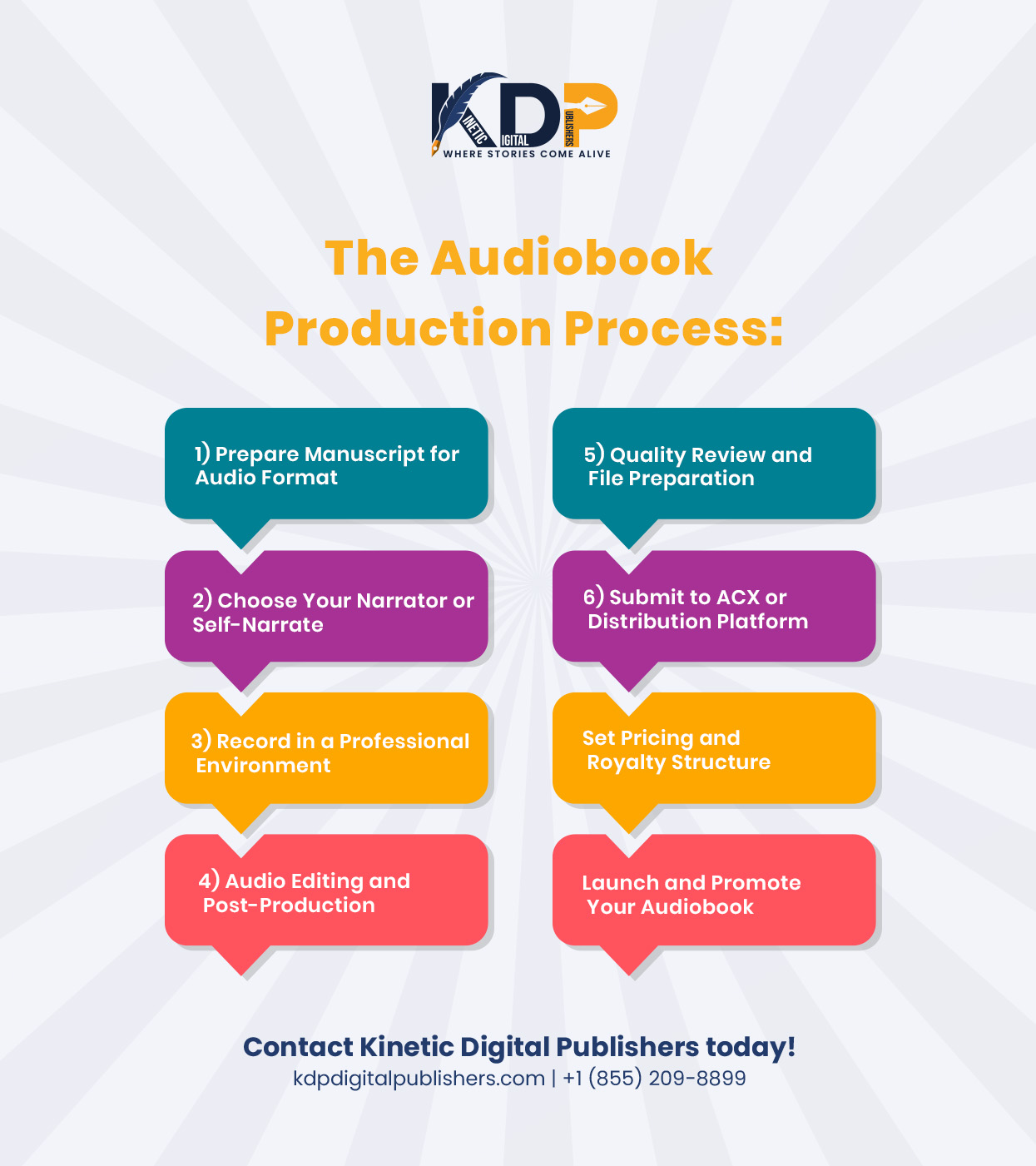
Step One — Preparing Your Manuscript for Audio
A book created for being read out loud is different from a book made ready to listen. Before narration starts, the manuscript needs to go through preparation for audio specifics. Visual materials like charts and tables, footnotes, or anything that requires the reader’s eyes rather than the listener’s ear will need to be changed. This step is usually omitted by authors who rush right into narration.
It is noticeable in the result of the work due to confusing silences or unclear statements meant for the readers’ understanding.
Step Two — Choosing Your Narrator
This is where audiobook production gets personal. Your narrator will be spending hours with your audience – and choosing the right narrator can elevate the audio version of your book above the written one, whereas the wrong narrator could make your writing seem boring regardless of its literary merit.
In terms of non-fiction books, there is something unique about an author who narrates his own story that a narrator simply cannot do justice to. There is an added sense of authenticity and validity that comes when your listener knows that they are hearing from the source directly. With fiction books, on the other hand, a professional narrator who is able to bring out the characters’ personalities and emotions would probably be better suited – if you haven’t performed before, that is.
Book narration services match your manuscript to narrators who have experience in your genre and whose voice fits the tone of your book. Sample listening is a must – what sounds like the ideal voice for a business book may fall entirely flat for a psychological thriller.
Step Three — Recording and Audio Production
The sound quality of an audiobook is very important. For example, ACX, which is Amazon’s audiobook marketplace, as well as many other big websites that provide audiobooks, have special technical requirements for the quality of their audio files; otherwise, they will be rejected during the process of quality control.
Professional audiobook production USA studios handles the recording environment. Such issues include microphone quality, noise reduction, and technical editing that gets rid of breathing noises, unwanted sounds, clicks made by lips, and all other little imperfections that can occur during the recording process. A listener will be able to distinguish the difference between the home recording and the professional recording within thirty seconds after hearing it.
Convert Book to Audiobook — Your Main Distribution Options
Now that your audiobook has been created and passes the quality test, you have to consider where and how you will distribute it. The platforms you pick influence not only your earnings but also your exclusivity and accessibility.
ACX and Audible — The Largest Marketplace
First of all, there is the ACX platform by Amazon. Audiobooks created via ACX can be distributed via Audible, Amazon, and Apple Books – the three biggest audiobook stores in the world. For most authors, this is an obvious choice.
ACX operates on two different models of royalties: exclusive and non-exclusive distribution. The first type means that your book will be exclusively available through Audible, Amazon, and Apple Books for seven years, and you will receive a forty percent royalty from each transaction. If you choose non-exclusive distribution, you will get only twenty-five percent, but you will be free to distribute it via other platforms as well.
If you want more money from your audiobook, then the former solution is definitely better for you. Additionally, the membership policy of Audible guarantees a lot of visibility. However, the second one may prove to be suitable for authors with a solid presence in other audiobook stores such as Libro.fm and Kobo Audiobooks.
Wide Distribution Through Other Platforms
Beyond ACX, audiobook publishing services can distribute your title to a broader range of platforms, such as Spotify. These include Google Play, Scribd, Findaway Voices, and more, which allow you access to listeners who do not use Audible. This is especially useful for authors who already have an audience independent from the Amazon platform or for nonfiction books that target a particular profession.
Audiobook Creation Cost — What Authors in the USA Should Expect
This is one of the most important questions to ask yourself while starting to research audiobooks, and knowing the figures will assist you in making an educated decision.
Pay-for-Production vs Royalty Share
There are two basic options when using a narrator on ACX to narrate your book. The first is the pay for production agreement, which means that you pay the narrator a certain sum per finished hour up front and take all of the royalties in the future. The pay-per-hour price for a professional narrator can be one hundred to four hundred dollars per finished hour, and a non-fiction book consisting of sixty thousand words makes six to eight hours of audio.
The other type of agreement is the royalty share, when the narrator works for free and gets fifty percent of the royalties. This reduces your upfront audiobook creation cost significantly, but it also means sharing half of every sale indefinitely. If the book has a good marketing potential, then it makes sense to opt for the pay-for-production model.
What Affects the Final Production Cost
It is also important to note that the budget needed for producing an audiobook depends on the length of your manuscript, the skills of the narrator, the way of recording (yourself or professionals), as well as expenses for post-production. Recording a non-fiction book of average length may cost less than $1,000. But producing a whole novel read by a professional voice-over actor with the help of post-production tools will require several thousand dollars.
Nevertheless, it does not look like much when considering possible revenue from a successful promotion of such an audiobook in the Audible library.
Here Is What Most Audiobook Guides Leave Out
Here comes the straightforward part that most of the guides in this area do not even bother to mention – the technical aspect of transforming your book into an audiobook is just one side of the coin. Making sure that the completed audiobook reaches the audience who would enjoy it – well, this is something that most authors overlook when releasing their audiobooks, and the thing that leaves many of them at a loss.
Luckily enough, all these stages are covered by Kinetic Digital Publishers’ audiobook publishing services. Starting from preparing manuscripts to narrator selection and then continuing with production management, submission to platforms, and audiobook promotion, our professionals will make sure that your audiobook will find its target listeners who are actually interested in reading the exact same material you’ve been writing. Can you imagine the relief you can get if you don’t have to figure out these stages on your own?
Audiobook Marketing — Getting Your Audio Version in Front of Listeners
Making a good audiobook but not putting any effort into marketing it is possibly the biggest mistake authors make following their investment of time and money in the recording process. Audiobook marketing is a specific discipline, and it is different enough from eBook or print marketing that it deserves its own attention.
Use Audible’s Own Promotional Tools
If your audiobook is published via ACX and Audible, you will have promotional codes. This refers to a few free download codes you can use before and after the book’s release to get people to review it. This tool is very useful because listeners who are offered a free audiobook will be most likely to give a good, unbiased review of it.
It’s also worth noting that Audible has its own system of discoverability that depends on activity, the number of downloads, reviews, and whether people actually finished the book. That means you need a good first week of promotion with a lot of promotional codes being used to help improve your discoverability later.
Cross-Promote to Your Existing Readers
The current audience that you already have on your mailing list, which includes those who have purchased your eBook or paperback version, will be the easiest and most receptive audience for your audiobook. There are people who purchase books in different formats because they like them so much. If you send an email to your existing mailing list informing them of your audiobook launch, with a link and a few seconds of audio clip, it will generate more sales compared to marketing it to new listeners.
Short clips from social media platforms will do wonders if you narrate them. They work especially well for fiction novels and non-fiction books that start with compelling opening sentences.
Is Narrating Your Own Audiobook the Right Choice
This question comes up for almost every author considering audiobook publishing, and the honest answer depends on a few specific factors rather than a simple yes or no.
When Author Narration Works Well
For memoirs, personal growth books, and other non-fiction categories in which the author’s experiences contribute significantly to the worth of the book, the author’s narration has a unique authority. The impact that your storytelling makes when you narrate your own life story through your own voice is something no other narrator can replicate – and this translates into reviews and loyalty from your audience.
On the other hand, if the author possesses an inherently compelling way of talking, knows his way around recording processes, and has access to the proper equipment to record his voice professionally at home, then the latter is just as viable as any professional studio. However, a poorly recorded book narration with a lot of background noise and errors will not make it past either the platform or your listeners.
When a Professional Narrator Is the Better Choice
A professional narrator who is well-versed in acting will bring to the table abilities that most authors, no matter how skillful as writers, lack. The difference in the listening experience between an author reading their book and a skilled narrator acting out the story is often considerable.
Book narration services that specialize in your genre can match you with narrators who already have a track record with similar titles, whose performances have met with approval among listeners similar to yourselves, and who can provide you with professional-grade audio in accordance with your schedule.
Conclusion
Your book’s audience is not only composed of those who will read the paperback version or the Kindle version. Many of them are those who listen to books at times, which aren’t even related to sitting quietly and reading. These listeners are actively searching for their next book title as we speak.
Audiobook publishing is how you reach them. This isn’t rocket science; it’s simply a matter of knowing what needs to be done, and it will definitely pay off in a system that works for itself, providing royalties whenever the button is clicked by your readers while running or commuting.
If you need professional help with all aspects, including manuscript preparation, voice artist selection, recording, and audiobook marketing, Kinetic Digital Publishers’ audiobook publishing services are here to make the process smooth, professional, and built for real results. Reach out today and let us help your book find its listeners.