|
Getting your Trinity Audio player ready...
|
Fiction vs Non-Fiction Publishing: What Authors Need to Know
You want to write a book. Great! But should you write fiction or non-fiction? This choice affects everything about your publishing journey.
Non-fiction publishing follows different rules than fiction. The writing process differs. Marketing strategies change. Even reader expectations vary completely between the two.
Many new authors pick their genre without understanding these differences. Then they struggle because they’re using the wrong approach. This non-fiction publishing guide and fiction publishing tips help you understand both paths clearly.
Let’s break down what makes each genre unique and which might be right for you.
What Fiction Publishing Really Means
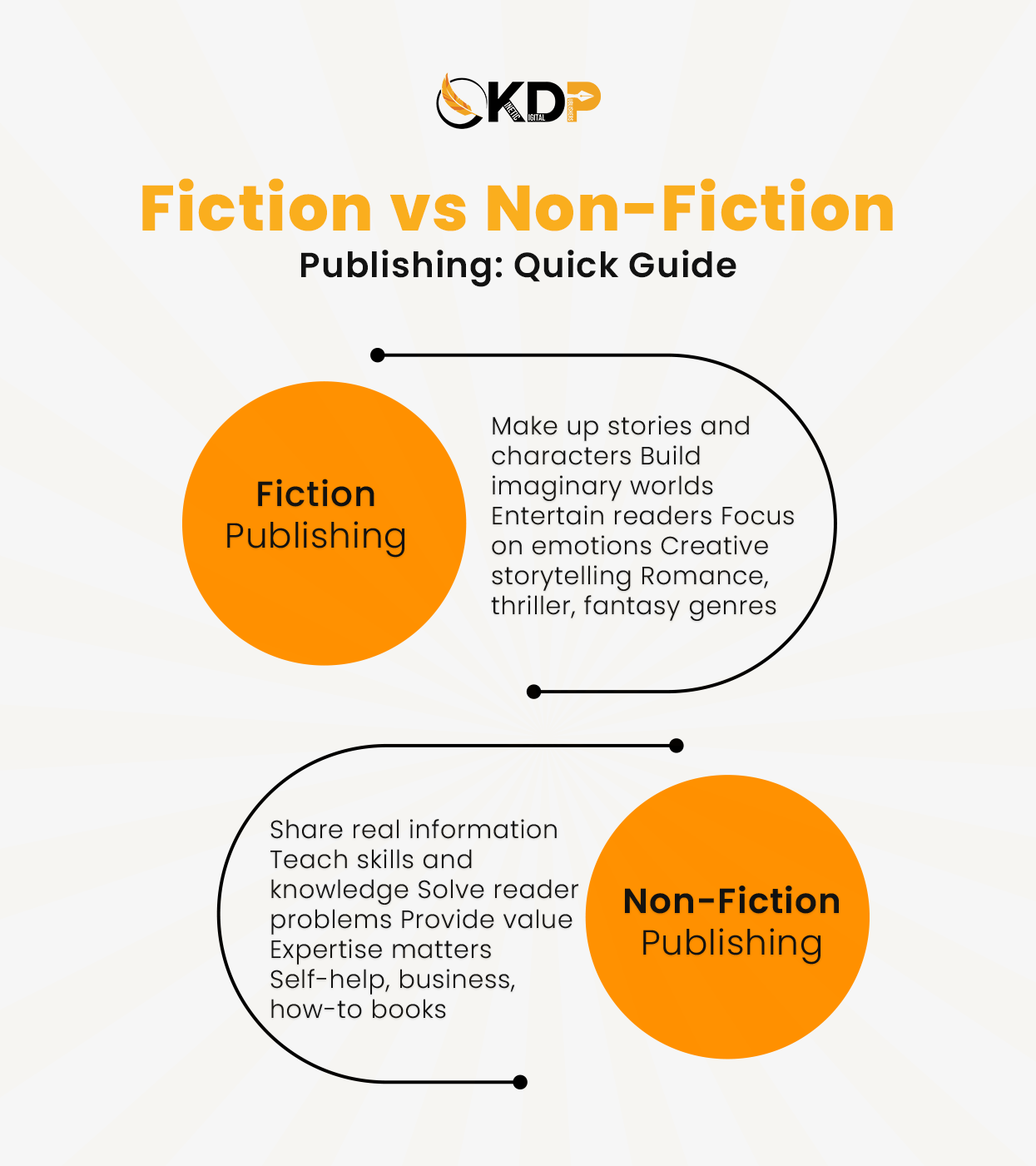
Fiction means you make up stories. Novels, short stories, fantasy worlds, and characters from your imagination. You create everything from scratch.
Fiction publishing requires strong storytelling skills. You build worlds readers can see. Create characters they care about. Write dialogue that sounds real.
Fiction readers want to escape. They read for entertainment. To feel emotions. To experience adventures they can’t have in real life. Your job is taking them on journeys.
Types of Fiction Books
Romance sells incredibly well. Readers devour love stories constantly. Mystery and thriller keep readers turning pages late into the night. Fantasy and sci-fi build huge loyal fanbases.
Literary fiction wins awards and critical praise. Horror makes readers sleep with lights on. Historical fiction teaches while entertaining. Each type has dedicated readers.
Pick fiction genres you actually enjoy reading yourself. Your passion shows in your writing. Readers feel when authors truly love their genre.
Understanding Non-Fiction Publishing
Non-fiction means real information. True stories. Facts. Knowledge. Skills you teach readers. Problems you help them solve.
Non-fiction publishing focuses on providing value. Your expertise matters. Your unique perspective counts. Readers buy non-fiction to learn, grow, or solve specific problems.
Non-fiction readers have goals. They want solutions. Better businesses. Healthier bodies. Stronger relationships. Financial success. Your book helps them achieve something real.
Popular Non-Fiction Categories
Self-help and personal development sell consistently. Business and entrepreneurship books teach skills people need. Health and wellness address universal concerns.
Memoirs share true life stories. How-to books solve practical problems. History educates. Parenting guides help stressed moms and dads. Cookbooks teach delicious recipes.
Book genre publishing in non-fiction rewards expertise. What do you know deeply? What have you experienced? What can you teach? Answer these to find your topic.
Fiction vs Non-Fiction Publishing
Writing Time and Process
Fiction often takes longer to write. Creating believable worlds and characters needs time. Plot holes must be fixed. Pacing perfected. Dialogue polished.
Non-fiction can move faster once you outline properly. You already know your content. Organization and clear explanations are main challenges. Less “creative block” happens.
Fiction rewrites can be extensive. Sometimes you restructure entire plots. Non-fiction rewrites usually focus on clarity and organization. Both need professional editing though.
Research Requirements
Fiction research depends on your story. Historical fiction needs accuracy. Sci-fi maybe not. Contemporary fiction needs believable modern details. Fantasy creates its own rules.
Non-fiction demands thorough research always. Facts must be correct. Claims need support. Expertise must be real. Credibility is everything in non-fiction.
Fact-checking matters hugely in non-fiction. One error damages your authority. Fiction allows creative license. As long as the story works, facts can bend.
Cover Design Differences
Fiction covers must intrigue and fit genre expectations. Romance looks romantic. Thriller looks thrilling. Fantasy looks magical. Readers judge fiction books entirely by covers.
Non-fiction covers emphasize clarity and benefits. Title matters more than image sometimes. Subtitle explains exactly what the book delivers. Professional appearance builds trust.
Fiction uses artistic imagery. Non-fiction uses clear text and simple graphics. Both need professional design. But the goals differ completely.
Title and Subtitle Strategy
Fiction titles can be creative and mysterious. They intrigue without explaining everything. Think of famous novels titles often don’t reveal the plot.
Non-fiction titles must be clear and benefit-focused. Readers should know exactly what the book teaches. Subtitles explain further. “How to…” or “The Complete Guide to…” work well.
Fiction subtitles are rare. Non-fiction almost always uses them. This simple difference shows how differently these genres work.
Reader Expectations
Fiction readers expect entertainment first. They want good stories. Characters they care about. Plots that surprise them. Endings that satisfy emotionally.
Non-fiction readers expect results. They want to learn something. Solve a problem. Improve their lives. If your book doesn’t deliver, they feel cheated.
Fiction can be “good” even without practical application. Non-fiction must provide tangible value. Different standards for different purposes.
Pricing Strategies
Fiction ebooks often price lower. $2.99 to $5.99 is common. Readers consume fiction quickly and buy lots of books. Volume matters.
Non-fiction can price higher. $9.99 to $19.99 works if you solve expensive problems. Business books, specialized knowledge, and professional development command premium prices.
Paperback pricing follows similar patterns. Fiction paperbacks $10-$15. Non-fiction paperbacks $15-$25. Value determines price more than page count.
Publishing Process Similarities
Despite differences, both genres share publishing basics. Both need quality writing. Both require professional editing. Both demand good covers.
Both benefit from strategic marketing. Both need Amazon optimization. Both should build author platforms. The fundamentals stay the same.
Whether fiction or non-fiction, get expert publishing help to ensure quality. Professional support matters regardless of genre.
Series vs Standalone Books
Fiction series work incredibly well. Readers who love book one eagerly buy books two, three, four. Building series creates loyal fanbases and steady income.
Non-fiction series work too but differently. Each book can stand alone while covering related topics. Business series. Self-help series. Same author brand across multiple books.
Single books work for both genres. But thinking series from the start builds better long-term author careers. Plan ahead even before publishing book one.
Marketing Fiction vs Non-Fiction
Fiction marketing relies heavily on emotion. Book covers must grab attention. Descriptions create intrigue. Reviews build word-of-mouth buzz.
Non-fiction marketing emphasizes benefits. What will readers learn? What problems get solved? What results can they expect? Clear promises matter most.
Fiction finds readers through genre communities. Romance readers. Mystery lovers. Fantasy fans. Each genre has passionate dedicated followers. Professional book marketing knows how to reach these communities.
Which Genre Should You Choose?
Pick the genre that matches your strengths and interests. Love creating characters and plots? Fiction might be your path. Have expertise to share? Consider non-fiction.
What do you read for fun? If you devour novels, you probably understand fiction better. If you read self-help and business books, non-fiction might feel more natural.
Your goals matter too. Want to entertain? Fiction. Want to teach and help? Non-fiction. Want to build authority in your field? Definitely non-fiction.
Getting Professional Support
Both fiction publishing and non-fiction publishing benefit enormously from expert guidance. Professionals know what works in each genre.
Different genres need different marketing approaches. Different cover styles. Different Amazon categories. Experts navigate these differences smoothly.
Kinetic Digital Publishers publishing experts understand both fiction and non-fiction deeply. We help authors succeed in whichever genre they choose. No cookie-cutter approaches custom strategies for your specific book.
Conclusion
Understanding non-fiction publishing versus fiction publishing helps you make smart decisions. Each path offers unique rewards and challenges.
Fiction publishing tips and this non-fiction publishing guide showed you key differences. Now you can choose wisely based on your goals, skills, and interests.
Book genre publishing succeeds when you match your strengths to your genre choice. Pick what excites you. What you’ll enjoy writing even when it gets hard.
Ready to publish your book in the right genre with the right support? Kinetic Digital Publishers publishing experts guide you through fiction or non-fiction successfully. Let’s turn your manuscript into a published book that reaches the readers who need it.