|
Getting your Trinity Audio player ready...
|
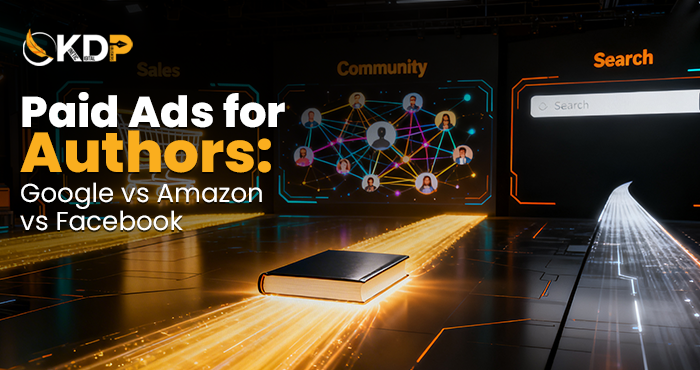
Paid Ads for Authors: Google vs Amazon vs Facebook
You want to sell more books. You know ads can help. But which platform should you use? Amazon? Facebook? Google?
Each book advertising platform works differently. What works for one author might waste money for another. Understanding these differences saves you from expensive mistakes.
Paid ads for authors aren’t one-size-fits-all. Your genre, budget, and goals determine which platform makes sense. This guide compares all three honestly so you can choose wisely.
Let’s break down Google, Amazon, and Facebook ads for book marketing. Simple comparisons. Clear explanations. Real talk about what actually works.
Understanding Amazon Ads for Authors
Amazon ads for authors appear right where readers shop for books. Someone searches “cozy mystery.” Your ad shows up. Perfect timing. Perfect audience.
Amazon knows what people buy. Their targeting is incredibly powerful. You can show ads to people who bought similar books. That’s targeting gold.
Amazon ads convert well because people are already in buying mode. They’re shopping. Your book appears. They click. They buy. Simple funnel that works.
How Amazon Ads Work
You bid on keywords. When someone searches that keyword, your ad might show. You pay only when people click. No clicks mean no cost.
Automatic campaigns let Amazon test keywords for you. Manual campaigns give you control. Most authors start automatic then move winners to manual campaigns.
Budget can start small. Even $5 daily tests whether Amazon ads work for your book. Scale up only after proving profitability.
Amazon Ads Pros and Cons
Amazon reaches people actively buying books right now. Not maybe someday. Right now. This intent matters hugely for conversion rates.
Competition can be fierce. Popular keywords cost more. New authors compete against established ones. Budget matters in competitive niches.
Learning curve exists but isn’t terrible. Dashi dashboards confuse at first. After running a few campaigns, it makes sense. Patience pays off.
Exploring Facebook Book Ads
Facebook book ads reach people where they spend tons of time scrolling. Not shopping. Scrolling. Different mindset than Amazon.
Facebook’s targeting is incredible. Interest-based. Demographic. Behaviors. You can target very specifically. Find your exact readers.
Visual ads matter on Facebook. Your book cover needs to stop scrollers. Description needs to intrigue. Different approach than text-heavy Amazon ads.
Facebook Ads Setup
Create ad account through Facebook Ads Manager. Choose objective. Usually “traffic” to send people to Amazon. Or “conversions” if tracking sales.
Design eye-catching ad creative. Your book cover prominently. Compelling text. Clear call-to-action. Test different images and copy.
Set budget and audience. Start with $5-10 daily. Target people who like similar authors or books. Age and location targeting helps narrow audience.
Facebook Ads Strengths and Weaknesses
Facebook builds awareness beautifully. People who weren’t looking for books discover yours. Top-of-funnel marketing works well here.
Conversion tracking is tricky. People click your ad. Go to Amazon. Maybe buy later. Hard to track exact ROI. Attribution challenges exist.
Testing is crucial. What works for romance might fail for business books. Your genre and audience determine success. Expect to test multiple approaches.
Google Ads for Book Marketing
Google ads appear in search results. Someone googles “best thriller books 2025.” Your ad can show up. Catching people researching books.
Google Display Network shows ads across websites. Banner ads. Sidebar ads. Following people around the internet. Brand awareness play.
YouTube ads are part of Google. Video ads before videos people watch. Different format entirely. Works for certain books and audiences.
Google Ads Mechanics
Set up Google Ads account. Create search campaigns or display campaigns. Write ad copy. Choose keywords. Set bids.
Search ads work like Amazon keyword targeting. Display ads target by interests and demographics. YouTube ads target by video content and viewer behavior.
Budget flexibility exists. Start small. Test. Scale what works. Google offers detailed analytics showing exactly what’s performing.
Google Ads Advantages and Limitations
Google reaches people everywhere. Massive scale. Billions of searches daily. Your potential audience is huge if targeting is right.
Book ads on Google often cost more than Amazon or Facebook. Competition from non-book advertisers drives prices up. ROI can be challenging.
Best for non-fiction usually. People google “how to start a business.” Your business book ad appears. Makes sense. Fiction is trickier on Google.
Comparing Costs Across Platforms
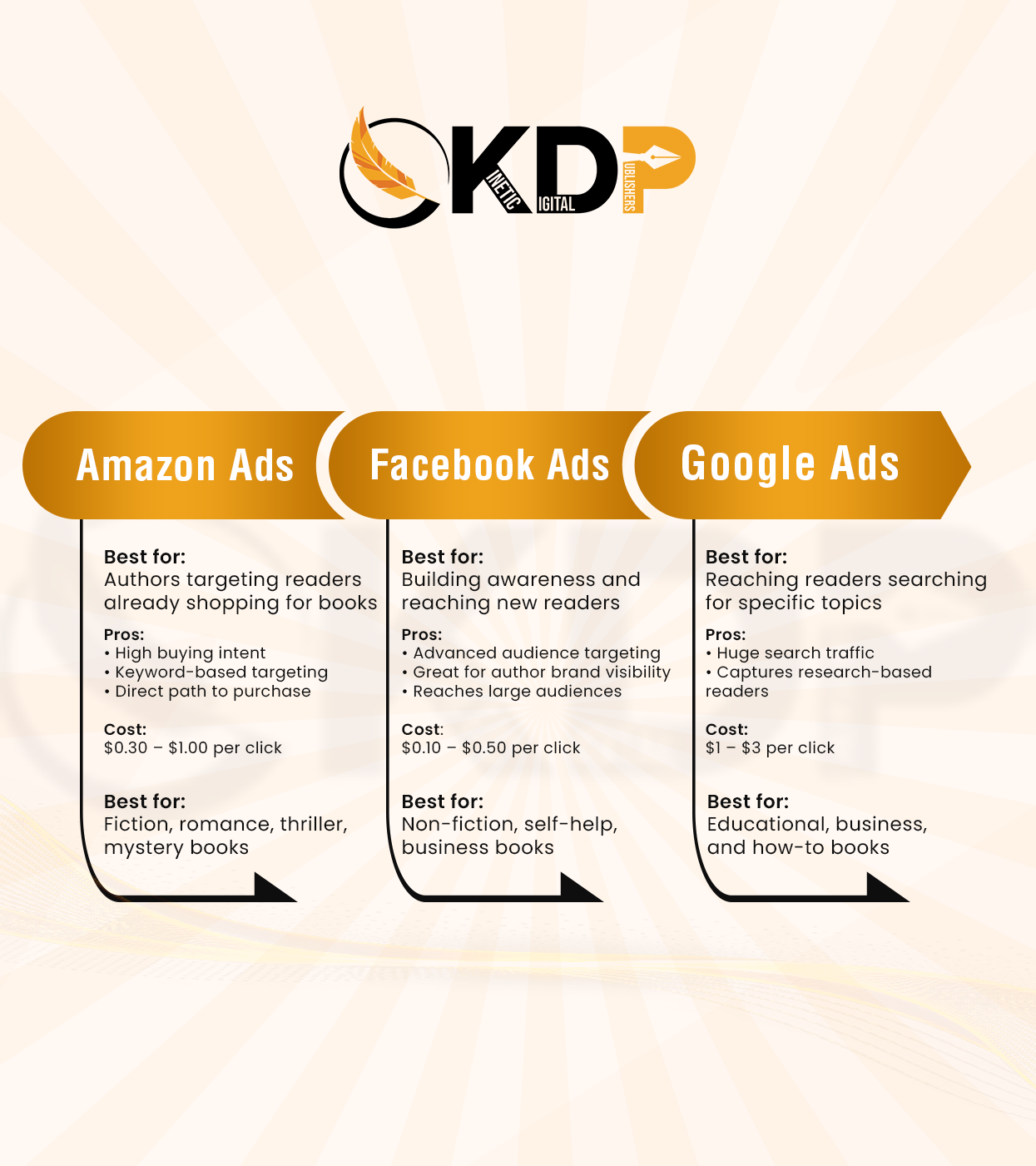
Amazon ads typically cost $0.30-$1.00 per click depending on keywords. Romance and thriller cost more. Niche genres cost less.
Facebook ads vary widely. $0.10-$0.50 per click common. But remember, these clicks don’t always convert to sales. Different buying stage.
Google ads can cost $1-$3 per click for competitive keywords. Much pricier than Amazon or Facebook. Budget needs to be bigger for testing.
Budget Recommendations
Start with $150-300 total for testing any platform. $5-10 daily for 30 days. See what happens. Gather data before increasing spend.
Amazon usually needs smallest test budget. People are there to buy. Conversion happens faster. Results show quicker.
Facebook and Google need longer testing periods. Awareness building takes time. Don’t judge performance after just one week.
Testing and Optimizing Your Ads
Start with one platform. Master it. Then add others if budget allows. Spreading thin across all three wastes money.
Track everything. Sales. Clicks. Cost per acquisition. Know your numbers. Data guides decisions better than guesses.
Test different ad copy. Images. Audiences. Keywords. Small changes can dramatically impact results. Never stop testing and improving.
What to Measure
Return on ad spend (ROAS) is key metric. Spend $100, make $200 in sales? That’s 2x ROAS. Profitable. Under 1x means losing money.
Click-through rate shows if your ad grabs attention. Low CTR means weak ad creative or wrong audience. Fix these before spending more.
Conversion rate tells if your book page sells. High clicks but no sales? Problem is your Amazon page, not your ad. Fix the page first.
Combining Platforms Strategically
Advanced strategy uses multiple platforms together. Facebook builds awareness. Amazon converts warm traffic. Google captures active researchers.
Retargeting works across platforms. Someone clicks Facebook ad but doesn’t buy. Amazon ad catches them later when they’re ready. Layered approach.
This requires bigger budgets. Start with one. Add others after proving first platform works. Build complexity slowly as you learn.
Sequential Marketing Funnel
Facebook introduces your book to cold audiences. Gets your name out there. Builds familiarity. Top of funnel.
Google catches people researching your topic. Middle of funnel. They’re considering options. Your ad presents your book as solution.
Amazon captures bottom of funnel. People ready to buy. Comparison shopping. Your ad appears. They click. They purchase. Conversion happens.
Getting Professional Marketing Help
Managing ads takes time and skill. Learning curves on each platform. Professional help speeds success and prevents expensive mistakes.
Professional publishing solutions often include ad management. Experts run campaigns. You focus on writing next book.
Build your author website to support ad campaigns. Landing pages convert better than sending traffic straight to Amazon sometimes. Capture emails. Build audience.
When to Hire Experts
You’re spending $500+ monthly on ads but seeing poor results. Time to get expert guidance. They diagnose problems fast.
You don’t have time to learn ad platforms. Your time is better spent writing. Delegation makes sense if budget allows.
You want to scale quickly. Professionals know what works. They’ve run thousands of campaigns. Their experience shortens your learning curve dramatically.
Starting Your First Campaign
Pick one platform based on your genre and goals. Fiction? Start Amazon. Non-fiction? Consider Facebook or Google too.
Set realistic expectations. First campaigns rarely profit immediately. You’re learning. Gathering data. Finding what works. Be patient.
Get expert book marketing help if you want faster results with less trial and error. Professional guidance prevents costly mistakes.
Conclusion
Paid ads for authors work when matched to the right book advertising platforms. Amazon ads for authors convert browsers to buyers. Facebook book ads build awareness. Google captures active researchers.
No single platform is “best.” Your genre, budget, and goals determine which makes sense. Test small. Learn. Scale winners. Cut losers.
Most successful authors eventually use multiple platforms. But start with one. Master it. Then expand if results justify increased spending.
Ready to run profitable book ads without wasting money? Kinetic Digital Publishers’ book marketing services include expert ad management across all platforms. We test, optimize, and scale campaigns that actually sell books. Talk to publishing experts about growing your book sales through smart advertising.